The Prayer That Saved My Family from Generational Poverty
In the Williams family, poverty was not a phase—it was an inheritance.
It had passed from grandfather to father, and from father to children, like an unspoken family tradition no one wanted but everyone endured.
A Family Trapped in Survival Mode
For Daniel Williams, life had always been about surviving, not living.
His father had worked all his life and died owing debts. His mother struggled to feed four children with a small roadside food stall that barely broke even. No matter how hard anyone worked, money always disappeared—rent unpaid, school fees incomplete, dreams postponed.
People in the neighborhood joked bitterly:
“The Williams are hardworking, but money doesn’t stay with them.”
Daniel heard it all growing up.
He watched opportunities slip through his fingers—jobs that promised much but paid little, businesses that collapsed just when they showed hope. It felt like an invisible ceiling hung over the family.
The Night Everything Felt Hopeless
At twenty-seven, Daniel was exhausted.
That night, electricity was out again. His younger sister had been sent home from school for unpaid fees. Their mother sat quietly, staring into nothing.
Daniel stepped outside and looked at the dark sky.
“Is this how our story ends?” he whispered.
Something broke inside him—not anger, not tears, but desperation.
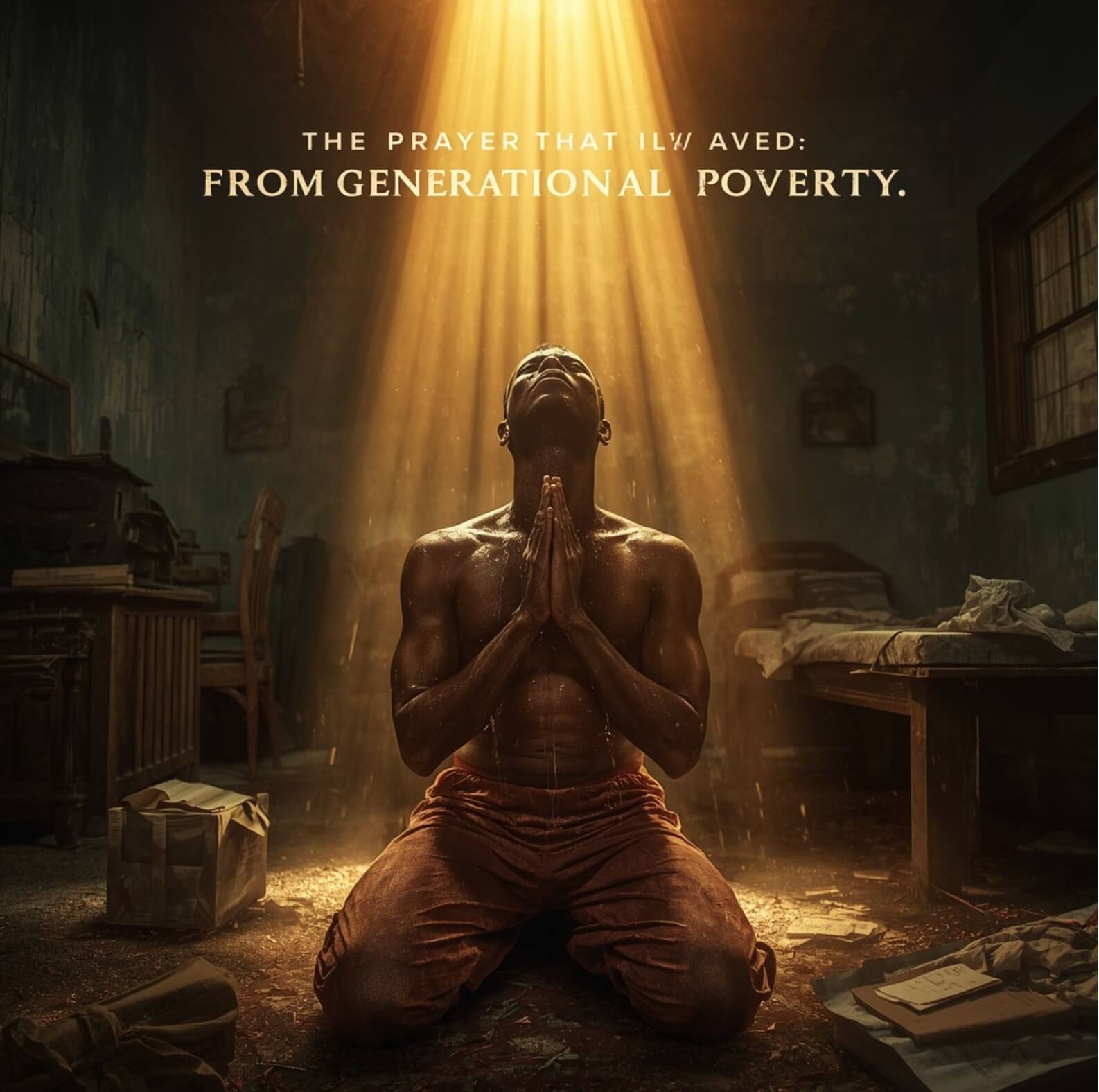
He returned inside, locked himself in the small room he shared with his brother, and did something he had never done seriously before.
He prayed.
A Prayer from Rock Bottom
It wasn’t fancy.
It wasn’t rehearsed.
It was raw.
Daniel spoke like someone who had nothing left to lose. He asked questions. He cried. He confessed bitterness. He begged for direction.
And then he said something strange—even to himself:
“If this poverty is a pattern, break it with me.”
When he stood up, nothing had changed physically. The house was still dark. The problems were still there.
But something inside him had shifted.
The First Crack in the Cycle
Two weeks later, Daniel received a call from an old contact—someone he had helped years ago without expecting anything in return. A job opportunity had opened, and his name came up.
The pay wasn’t huge, but it was stable.
Then another door opened. A side hustle he had tried before—but failed—suddenly took off. Clients came unexpectedly. Payments came on time.
For the first time in their family history, money stayed.
Bills were paid. Debts reduced. School fees cleared before deadlines.
The Williams family was confused—but grateful.
The Pattern Finally Broken
Years later, Daniel owned a growing business and employed others. His siblings graduated. His mother shut down the roadside stall—not because she failed, but because she no longer needed it.
When people asked Daniel what changed, he didn’t talk about luck.
He said this instead:
“Something was broken the day I stopped accepting poverty as normal.”
The Lesson Hidden in the Story
Generational poverty doesn’t always look like laziness.
Sometimes it looks like hard work with no reward.
And sometimes, what breaks it isn’t just strategy—but one sincere moment of surrender.
The Williams family still remembered that night—the prayer that didn’t make noise, didn’t bring thunder, but quietly rewrote their story.
Read More Stories: From Rock Bottom to Rising Strong




![How One “No” Led Me to My Greatest Yes [True Life Story]](https://freeprojectmaterials.com/wp-content/uploads/2026/04/Medical-Service-3-1-768x763.jpg)