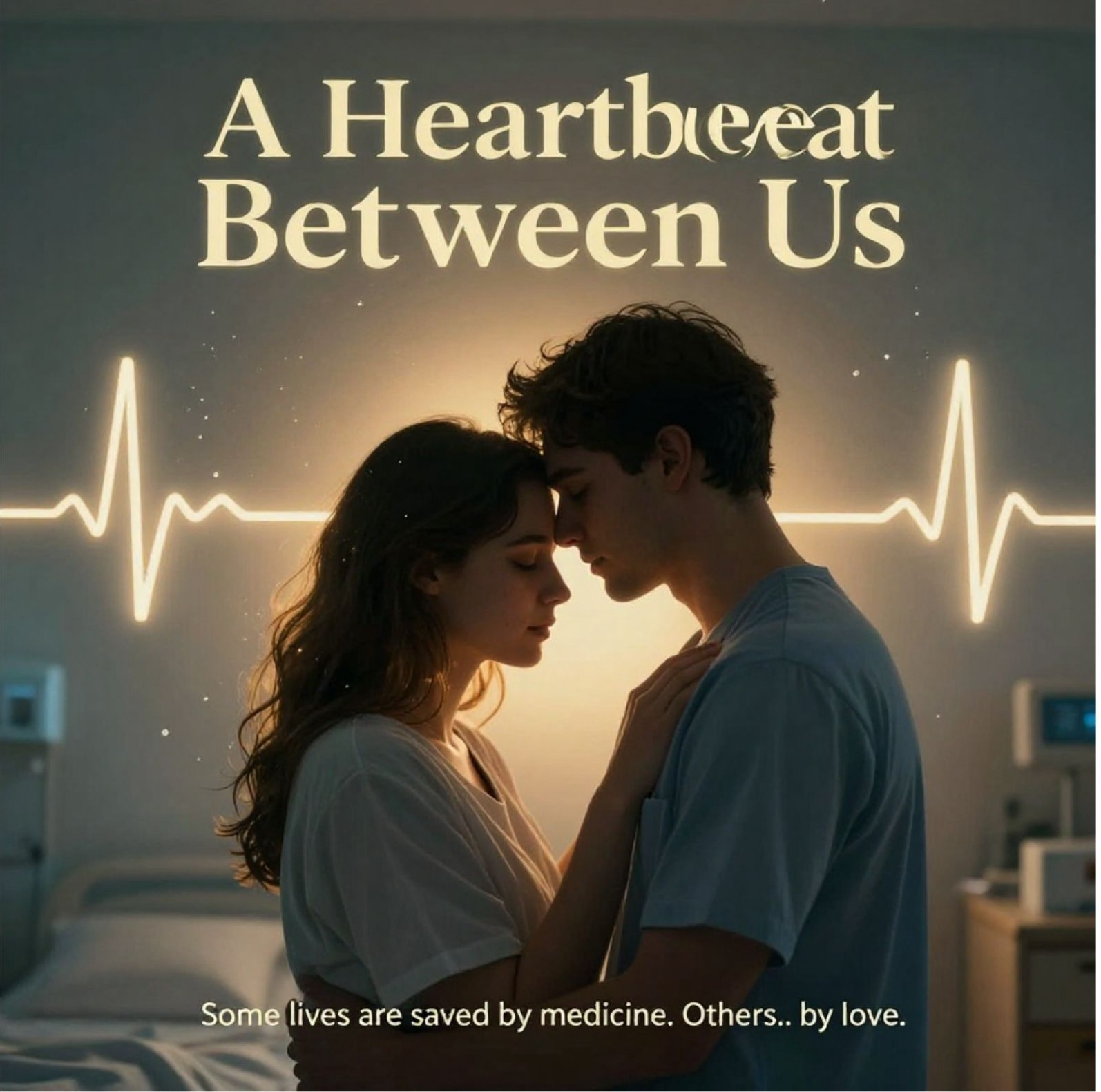
The Night We Met Twice
I didn’t believe in fate. Not in the poetic, star-aligned, “what’s meant to be will find you” kind of way people romanticized. Life, to me, had always been a sequence of choices—some intentional, some careless—and the consequences that followed.
That belief held steady… until the night I met her.
And then, somehow, met her again.
It started with rain.
Not the gentle, cinematic drizzle that makes love stories look beautiful, but a relentless, unforgiving downpour that turned the city into a blur of headlights and reflections. I had just left the hospital—twelve hours into a shift that felt like it had stretched into a lifetime—and all I wanted was to get home, peel off my soaked clothes, and forget the world existed.
But the rain had other plans.
Taxis were scarce, the buses overcrowded, and my phone was hanging onto its last 3% of battery like it had a personal vendetta against me. I ducked under the small awning of a closed bookstore, hugging my jacket tighter around me, watching the streets flood inch by inch.
That’s when I saw her.
She stood a few feet away, equally stranded, equally drenched. Her hair clung to her face, and her dress—once probably white—was now a soft shade of gray from the rain. But it wasn’t her appearance that caught me.
It was her expression.
She was smiling.
Not the kind of smile you give when you’re trying to make the best of a bad situation. No—this was different. It was calm, almost amused, like the storm was an inside joke she was in on.
“You look like you’re losing a battle,” she said, glancing at me.
I blinked. “Against the rain?”
“Against everything,” she replied lightly.
There was something disarming about her. Maybe it was her tone, or the way she spoke like she’d known me longer than a few seconds. Either way, I found myself answering.
“Long day,” I said.
“Those are the worst kind,” she said. “They make you forget that tomorrow exists.”
I let out a small laugh. “And you? You look like you’re enjoying this.”
She tilted her head, considering the rain. “I like moments that feel… unusual. Like they’re not supposed to happen, but they do anyway.”
I didn’t know what to say to that.
For a while, we just stood there, listening to the rain drum against the pavement. The city had quieted in that strange way it does during storms, where everything feels suspended—paused between what was and what’s coming next.
“I’m Mira,” she said suddenly, holding out her hand.
“Daniel,” I replied, shaking it.
Her hand was cold, but her grip was firm.
“Tell me something true, Daniel,” she said.
“Something true?”
“Anything. But not something obvious. Something you don’t usually say out loud.”
I hesitated. It was an odd request—too personal for a stranger. But there was something about the moment, the rain, her presence… it made the world feel distant, like consequences didn’t exist here.
“I think,” I began slowly, “that I’m more tired than I let people see.”
She nodded, as if she had expected that answer. “That’s a good one.”
“Your turn.”
She looked out at the rain again, her smile fading just slightly.
“I think,” she said quietly, “that some people come into your life twice. Once to change everything… and once to remind you why they had to leave.”
A strange chill ran through me, unrelated to the weather.
“That’s… oddly specific,” I said.
“Maybe,” she replied. “Or maybe it’s just true.”
Before I could ask her what she meant, a taxi pulled up to the curb.
She stepped forward immediately, then paused, looking back at me.
“Do you believe in second chances, Daniel?”
“I don’t know,” I admitted. “I’ve never really had one.”
Her smile returned, softer this time.
“Maybe you just haven’t noticed them yet.”
And then she was gone.
I didn’t expect to see her again.
People like Mira felt temporary—like moments you weren’t meant to hold onto. By the time I got home that night, I had already convinced myself she was just a passing interaction, a strange but fleeting connection born out of exhaustion and rain.
Days turned into weeks, and life resumed its usual rhythm.
Work. Sleep. Repeat.
But sometimes, in the quiet moments between everything, I’d think about her. About the way she spoke, the things she said. About that unsettling line—
Some people come into your life twice.
I dismissed it every time.
Until three months later.
It was another night shift.
Another long, exhausting stretch of hours that blurred into each other. The emergency room was unusually busy, and by the time my shift ended, I felt like I was running on nothing but instinct.
“Last patient,” the nurse said, handing me a file.
I nodded, barely glancing at it as I stepped into the room.
And then I froze.
She was sitting on the bed.
Mira.
For a moment, the world tilted. The fluorescent lights buzzed faintly overhead, the distant sounds of the hospital fading into a dull hum. I wondered if I was imagining things—if exhaustion had finally caught up with me.
But then she looked up.
And smiled.
“You look like you’ve seen a ghost,” she said.
My heart was pounding. “Mira?”
“So you do remember me,” she said.
“Of course I—” I stopped, trying to steady myself. “What are you doing here?”
“Minor accident,” she said, gesturing to the bandage on her arm. “Nothing dramatic, unfortunately.”
I stared at her, trying to reconcile the memory of that rainy night with the reality in front of me.
“You disappeared,” I said.
“You let me,” she replied gently.
That stung more than I expected.
“I didn’t even know how to find you,” I said.
“Exactly.”
There was no accusation in her voice, just quiet observation.
I exhaled, running a hand through my hair. “I didn’t think I’d see you again.”
“I told you,” she said softly, “some people come into your life twice.”
A silence settled between us, heavier this time.
“You meant this?” I asked.
She didn’t answer immediately.
Instead, she studied me, like she was searching for something in my face.
“Tell me something true, Daniel,” she said again.
The familiarity of the question hit me harder than anything else.
I swallowed.
“I thought about you,” I admitted. “More than I should have for someone I only met once.”
Her expression softened.
“That’s a good one,” she said.
“Your turn.”
She looked down at her hands, her fingers tracing the edge of the bandage.
“I didn’t expect to see you again,” she said quietly. “Not like this.”
“What does that mean?”
She hesitated.
And for the first time since I’d met her, she looked uncertain.
“It means,” she said slowly, “that the first time we met… it wasn’t supposed to happen.”
I frowned. “What are you talking about?”
She looked up at me, her eyes searching mine.
“That night,” she said, “I was on my way to leave the city. For good.”
Something in my chest tightened.
“And I did,” she continued. “The next morning.”
“Then how—”
“I came back,” she said.
“Why?”
She held my gaze.
“Because I couldn’t stop thinking about you.”
The words hit me like a sudden drop.
“But here’s the part I didn’t tell you,” she added.
My pulse quickened.
“What part?”
She took a breath.
“The night we met… wasn’t the first time I saw you.”
I blinked. “What?”
“I knew who you were,” she said.
“That’s not possible,” I replied. “I would have remembered.”
“You wouldn’t,” she said softly. “Because you don’t remember anything about that night.”
A strange, creeping unease settled over me.
“What night?”
Her voice dropped to almost a whisper.
“The night you died.”
The room felt suddenly too small.
“That’s not funny,” I said, though my voice lacked conviction.
“I’m not joking.”
I shook my head. “I’ve never—”
“You were brought into this hospital,” she continued. “Three months ago. Severe injuries. Car accident.”
My mind raced.
Three months ago.
There was a gap.
A space in my memory I had never questioned—because I hadn’t realized it was missing.
“I was here,” she said. “Not as a patient. As a visitor.”
“For who?”
She hesitated.
“For you.”
The world seemed to tilt again.
“I didn’t know you,” she said. “Not really. But I saw you. And something about you… stayed with me.”
I tried to speak, but no words came out.
“You weren’t supposed to survive,” she added quietly.
A cold wave washed over me.
“But you did,” she said. “And I left. I thought that was the end of it.”
“And the rain?” I asked.
Her eyes softened.
“That was the second time.”
I stared at her, my thoughts unraveling.
“So you’re saying… we met before I even knew who you were?”
She nodded.
“And then we met again… by chance?”
“Or not by chance,” she said.
Silence stretched between us.
“Why are you telling me this?” I finally asked.
“Because I think,” she said carefully, “that some connections don’t follow the rules we expect them to.”
“And what does that mean for us?”
She smiled faintly, but there was sadness in it now.
“It means this might be the part where we have to decide if this is coincidence… or something we’re meant to do something about.”
I looked at her—really looked at her—and realized something that unsettled me even more than everything she’d said.
She felt familiar.
Not in the way strangers sometimes do, but in a deeper, quieter way—like a memory just out of reach.
“What happens if we ignore it?” I asked.
She stood, wincing slightly as she adjusted her arm.
“Then this,” she said, gesturing between us, “becomes just another almost.”
“And if we don’t?”
She stepped closer.
“Then maybe,” she said softly, “this is where the story actually begins.”
For the first time in a long time, I didn’t think about logic or probability or the neat explanations I used to rely on.
I thought about the rain.
About the space in my memory.
About the strange, undeniable pull between two people who had met once… and somehow, impossibly, met again.
“Tell me something true, Mira,” I said.
She waited.
I took a breath.
“I don’t want this to be an almost.”
Her smile—this time—was different.
Real.
Certain.
“Good,” she said.
“Because neither do I.”
And just like that, the night we met twice became the night everything truly started.
Read More Stories: Falling for You in Borrowed Time