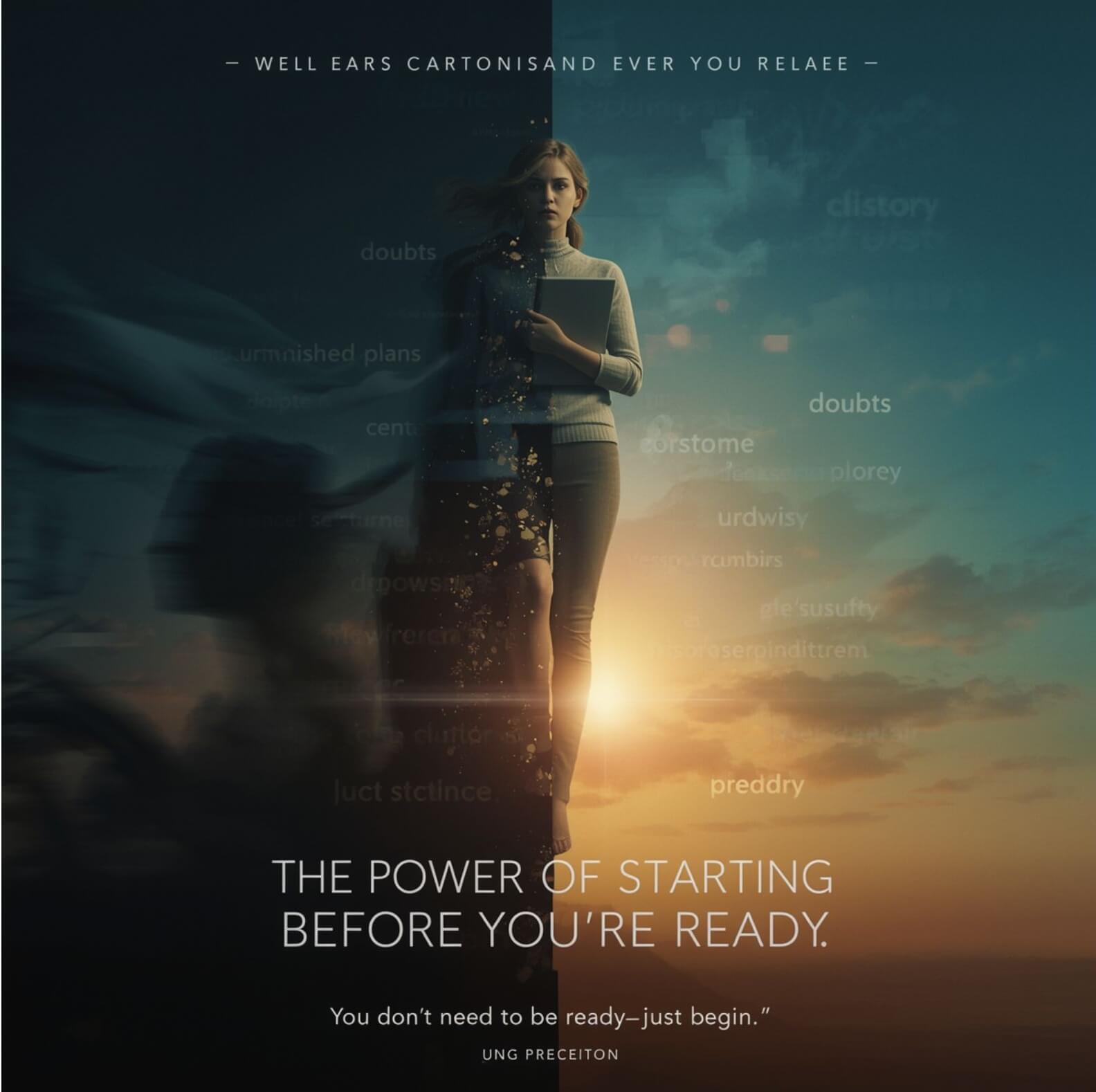
Turning Pain Into Purpose: My Unexpected Path
The first time I heard the sound of silence, it was deafening.
Not the peaceful kind that wraps around you like a warm blanket on a rainy afternoon. No, this silence was hollow—sharp, echoing, and unkind. It came crashing into my life on a Tuesday morning I had expected to be ordinary. The kind of morning where the sun rises without ceremony and life continues its predictable rhythm.
But that morning, everything stopped.
I remember standing at the hospital corridor, my fingers trembling around a cup of coffee I never drank. People passed by me—nurses in scrubs, families whispering prayers, doctors moving with urgent precision—but I was frozen, caught in a moment that refused to move forward.
“Miss Florence?”
The doctor’s voice felt distant, like it was traveling through water to reach me.
“Yes,” I managed, though my voice didn’t quite sound like my own.
He sighed, the kind of sigh that prepares you for something irreversible. “I’m very sorry…”
And just like that, my life divided itself into two parts: before and after.
Before that moment, I had been certain of my path.
I was a final-year law student, driven and meticulous, with plans that stretched far beyond the horizon. I had always been the “strong one” in my family—the reliable daughter, the dependable friend, the person everyone turned to when things fell apart.
And things did fall apart often.
But I never did.
Or at least, I thought I didn’t.
My younger brother, Peter, had always been my opposite. Where I was cautious, he was bold. Where I calculated risks, he leaped without looking. He was the laughter in our home, the spark that kept everything alive.
And then, in one cruel twist of fate, he was gone.
A car accident.
Two words that felt too small to carry the weight of what they had taken.
After the funeral, life didn’t just continue—it dragged.
Everything felt heavier. The air, the silence in our home, even the memories that once brought joy now cut like broken glass.
My mother stopped singing.
That was the first sign that something was truly wrong.
She used to hum while cooking, her voice filling every corner of our house with warmth. But now, the kitchen was quiet. Too quiet.
My father buried himself in work, leaving early and returning late, as if the walls of our home had become unbearable.
And me?
I tried to be strong.
I told myself that someone had to hold everything together. That grief was a luxury I couldn’t afford. So I buried it, deep within me, and carried on.
I returned to school two weeks later.
Big mistake.
The lecture hall felt unfamiliar, like I was sitting in someone else’s life. My classmates whispered condolences, their words kind but distant. Professors gave me sympathetic glances, but their lectures continued as though the world hadn’t shifted beneath my feet.
Because for them, it hadn’t.
But for me, nothing made sense anymore.
What was the point of all this? The studying, the late nights, the endless pursuit of a future that suddenly felt uncertain?
I began to drift.
Assignments went unfinished. Lectures became optional. Sleep turned into an escape I couldn’t get enough of.
And the silence—that same deafening silence—followed me everywhere.
The breaking point came one evening in the most unexpected way.
I was sitting on the floor of my room, surrounded by unopened textbooks, when my phone buzzed. It was a message from an unknown number.
“Hi. I got your contact from the university support group. I just lost my sister. I don’t know how to cope. Can you help?”
I stared at the message for a long time.
Help?
The irony almost made me laugh.
I couldn’t even help myself.
And yet… something about those words stirred something in me. A faint, almost forgotten feeling.
Understanding.
I knew that pain. The confusion, the anger, the emptiness—it was all too familiar.
My fingers hovered over the keyboard before I finally replied.
“I don’t have all the answers. But I understand how you feel. You’re not alone.”
That message changed everything.
What started as a single conversation became something more.
The girl—her name was Amanda—began texting me regularly. At first, it was just questions about how to get through the day. Then it became deeper conversations about grief, guilt, and the strange ways loss reshapes you.
And as I responded to her messages, something unexpected began to happen.
I started to heal.
Not all at once. Not in some dramatic, life-changing moment. But slowly, quietly, like a wound learning how to close.
Helping Amanda gave my pain a purpose.
For the first time since Peter’s death, I felt like I wasn’t just surviving—I was doing something that mattered.
Word spread.
Amanda told a friend, who told another, and soon, I found myself receiving messages from strangers who were navigating their own storms.
Loss. Depression. Anxiety. Loneliness.
Each story was different, yet somehow the same.
And with each conversation, I realized something profound:
Pain connects us.
It strips away pretense and forces us to confront what it means to be human.
And in that shared vulnerability, there is strength.
But healing isn’t linear.
Just when I thought I was finding my footing, everything came crashing down again.
It happened on Peter’s birthday.
The house felt heavier than usual. My mother sat quietly in the living room, holding his photograph. My father didn’t come home at all.
And me?
I broke.
For the first time since his death, I allowed myself to feel everything I had been suppressing.
The anger. The sadness. The unbearable weight of his absence.
I cried until I couldn’t breathe, until my chest ached and my throat burned.
And in that moment of complete vulnerability, I realized something I had been avoiding:
Being strong doesn’t mean not breaking.
It means allowing yourself to break—and still finding a way to rise again.
That night, I made a decision.
I couldn’t keep living in survival mode.
If helping others had brought me even a glimpse of healing, then maybe—just maybe—I could turn that into something bigger.
Something meaningful.
Something lasting.
The idea came to me slowly.
A support network.
A safe space for people dealing with grief and emotional pain. A place where they could share their stories without judgment, where they could feel seen, heard, and understood.
It sounded ambitious.
Impossible, even.
I was just a student with no resources, no connections, and no real plan.
But I had something else.
I had purpose.
The early days were messy.
I started small—a WhatsApp group with a handful of people who had reached out to me. We shared our experiences, offered support, and created a space where vulnerability wasn’t a weakness, but a strength.
At first, I doubted myself constantly.
Who was I to lead something like this?
What if I said the wrong thing? What if I couldn’t help?
But every time someone said, “Thank you, this helped,” I found the courage to keep going.
Months passed.
The group grew.
What started as a handful of people became dozens, then hundreds.
We organized virtual meetings, invited counselors to speak, and created resources for people struggling with grief and mental health challenges.
And somewhere along the way, I found myself again.
Not the person I used to be.
But someone stronger.
Someone who understood that pain doesn’t have to be the end of your story—it can be the beginning of something new.
The real turning point came a year later.
I was invited to speak at a university event about mental health and resilience.
Standing on that stage, looking out at a room full of faces, I felt a familiar wave of fear.
What if I couldn’t do this?
What if my voice failed me?
But then I remembered why I started.
I wasn’t there because I had all the answers.
I was there because I had lived through the questions.
So I took a deep breath and began.
“I used to think pain was something to avoid,” I said, my voice steady despite the storm inside me. “Something to run from, to hide, to pretend didn’t exist.”
The room was silent.
“But I’ve learned that pain isn’t the enemy. It’s a teacher. A guide. And sometimes, if you let it, it can lead you to your purpose.”
I shared my story.
The loss. The struggle. The unexpected journey that followed.
And when I finished, something incredible happened.
People stood up.
Not just to applaud, but to share their own stories.
In that moment, I realized something powerful:
We are not alone in our pain.
And when we choose to share it, to transform it, to use it as a force for good—we create something bigger than ourselves.
Today, the support network has grown into an organization that reaches people across the country.
We provide counseling resources, host workshops, and continue to create spaces where people can heal.
But more importantly, we remind people of one simple truth:
Your pain does not define you.
What you do with it does.
Sometimes, I still hear the silence.
It hasn’t disappeared completely.
But it’s different now.
It’s no longer hollow or empty.
It’s peaceful.
A reminder of how far I’ve come.
A reminder that even in the darkest moments, there is light waiting to be found.
If you had told me two years ago that the worst moment of my life would lead me here, I wouldn’t have believed you.
But life has a way of surprising us.
Of taking our broken pieces and turning them into something meaningful.
Something beautiful.
I still miss Peter every day.
That pain hasn’t gone away.
But now, it has a purpose.
And in that purpose, I’ve found something I never expected:
Hope.
Because sometimes, the path you never planned for is the one that leads you exactly where you’re meant to be.
Read More Stories: From Rock Bottom to Rising Strong




![How One “No” Led Me to My Greatest Yes [True Life Story]](https://freeprojectmaterials.com/wp-content/uploads/2026/04/Medical-Service-3-1.jpg)